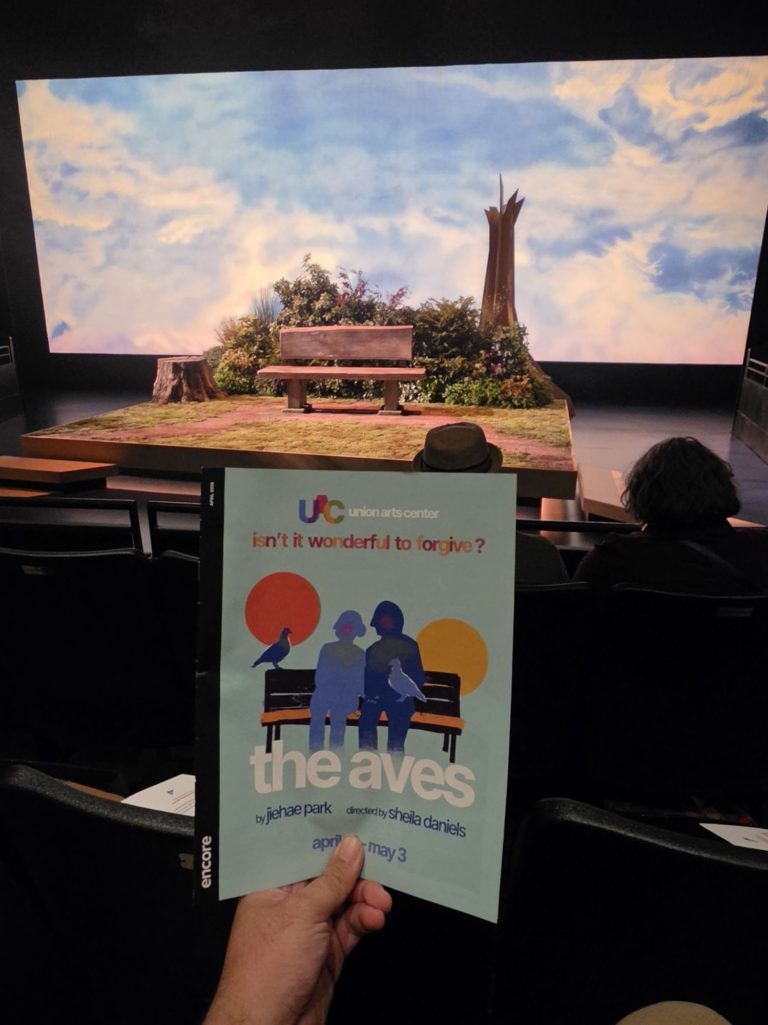
@showsiveseen Jiehae Park's "the aves" "what if" dialogue #play at @unionartscenter. Robbie Matos's lighting design was the star of the show! Complemented by LB Morse's scenic design. Closes 5/3/26. showsiveseen.com/15232 Director: Sheila Daniels Stage Mgr: Jaime J Kranz or Mackenzie Breda #theatre#showsiveseen#pigeon♬ Impostor Syndrome – Sidney Gish
Elevator Thoughts (aka Tweet):
Jiehae Park’s the aves what-if dialogue play at Union Arts Center. Robbie Matos’s lighting design was the star of the show! Complemented by LB Morse’s scenic design. Closes 5/3/26.
Recommendation: See it if you’re okay with dialogue plays.
Was This the First Time I Attended a Production of this Show? Yes
Would I See It Again 3 Years from Now? No
Mainstream Appeal: Low to medium
If A Random Stranger Asked What Show They Should See This Weekend, Would I Mention This Production? Maybe
My Synopsis (No Spoilers): Two couples longing for change, a second chance, or (maybe?) a cure undergo a body-swapping procedure.
Synopsis from the Licensor or Theatre Company: An older couple enjoys a summer day on a park bench, talking about birds and the likelihood of rain. A simple conversation…or maybe more. An ordinary afternoon transforms into a shifting world of surreal possibilities in a stunning and surprisingly funny meditation on memory, forgiveness, and the lifelong process of becoming who we are. From the mind of acclaimed playwright Jiehae Park in her signature innovative style, this Seattle premiere will reignite your sense of wonder.
Type: Play
World Premiere: No
Several or Few Scenes: Few
Several or Few Settings/Locations: One – a park bench
Static (Stationary) or Dynamic Set: Static
Prior Exposure/Knowledge Required: None
Defined Plot/Storyline: It was way more dialogue than action
Union Actor(s): 1
Total Actor(s): 5
Perceived Pace of the Show: Slow to medium
Was there an intermission? No
Length (Including Any Intermission): 90 minutes
Other Rave(s)
Design:
From the moment I found my seat, the production signaled that its design would be a highlight. While waiting for the show to begin, lighting designer Robbie Mato offered a quiet preview of his craft with gentle, unhurried transitions between dawn, morning, afternoon, dusk, and night. Occasionally, the spotlights swept outward like a burst of glistening sunlight on the audience.
When one scene called for a thunderstorm, Mato’s sudden flash of light paired seamlessly with Matt Starritt’s sound design to depict lightning. The one misstep came early though when the ambient park sounds cut out abruptly, creating a jarring silence that felt out of step with the otherwise gentle, gradual atmosphere the lighting design had established before the show began. A slow fade of the ambient audio rather than a hard cut would have better served the transition.
Scenic designer LB Morse brought quiet ingenuity to the passage of seasons. Four tree branches hung above the stage, each illuminated in turn to mark green summer, gold autumn, a bare snowy winter, and cherry blossom spring. As the seasons shifted, leaves, snow, or petals drifted down to the stage and the spotlight illumination moved to the next season’s branch. However, it was puzzling that they skipped summer at the play’s end. Was that symbolic? And while the branches transformed beautifully overhead, the lush foliage at stage level remained unchanged, which wasn’t consistent against the stark, barren winter background projection. The park bench and surrounding greenery otherwise evoked an almost storybook aura between an idyllic pastoral impressionist painting and the saturated perfection of a Nintendo landscape.
Other Musing(s) and Observation(s)
Body Swap: The play posed a compelling hypothetical. What if body-swapping technology was possible? At times, the performers truly imitated a different character and the shift was readable. At other times, particularly early on, it was unclear whether the blending of mannerisms was intentional (suggesting that swapped bodies retained traces of their former selves) or whether it was simply inconsistency. What exactly transferred in the swap remained fuzzy. Did the playwright intend for blended new characters? Additionally, for at least half the characters, the motivations driving their decision to swap were muddled, which made it difficult to invest in their consequences.
Jock: Jerik Fernandez’s turn as a frat-boy jock persona was an unexpected delight. He portrayed the archetype with a loose, self-satisfied confidence reminiscent of Kellan Lutz and Alan Ritchson.
Random Character: A brief appearance by an unnamed, non-speaking actor on stage for no more than a minute added little to the narrative. Why did the role exist at all? It felt like a remnant of an earlier script draft that hadn’t been cut in time. Honestly, it was an unnecessary production cost.
Pigeons and Doves: Another puzzling detour was talking pigeon puppets. However, the puppetry itself by designer Annett Mateo had genuine charm, and the neck movements alone were worth a smile. It was a missed opportunity though that the script didn’t protest much the underlying colorism between pigeons and doves.
Parking: Paid lot or paid street parking. If I don’t walk to this theatre, I park in the old convention center garage with the entrance between Seneca and Pike. There is indoor access from the garage to the theatre if you walk through the old convention center.
Like/Comment/Share my Social Media Posts About this Performance:
Photos: See production photos below by Giao Nguyen.
Cast and Production Team: See after photos below.
Varinique “V” Davis as the Young Woman and Jerik Fernandez as the Young Man. Photo by Giao Nguyen.Varinique “V” Davis as the Young Woman and Kathy Hsieh as the Old Woman. Photo by Giao Nguyen.Bird puppets from THE AVES. Photo by Giao Nguyen.Varinique “V” Davis as the Young Woman and Jerik Fernandez as the Young Man. Photo by Giao Nguyen.Kathy Hsieh as the Old Woman and R. Hamilton Wright as the Old Man. Photo by Giao Nguyen.
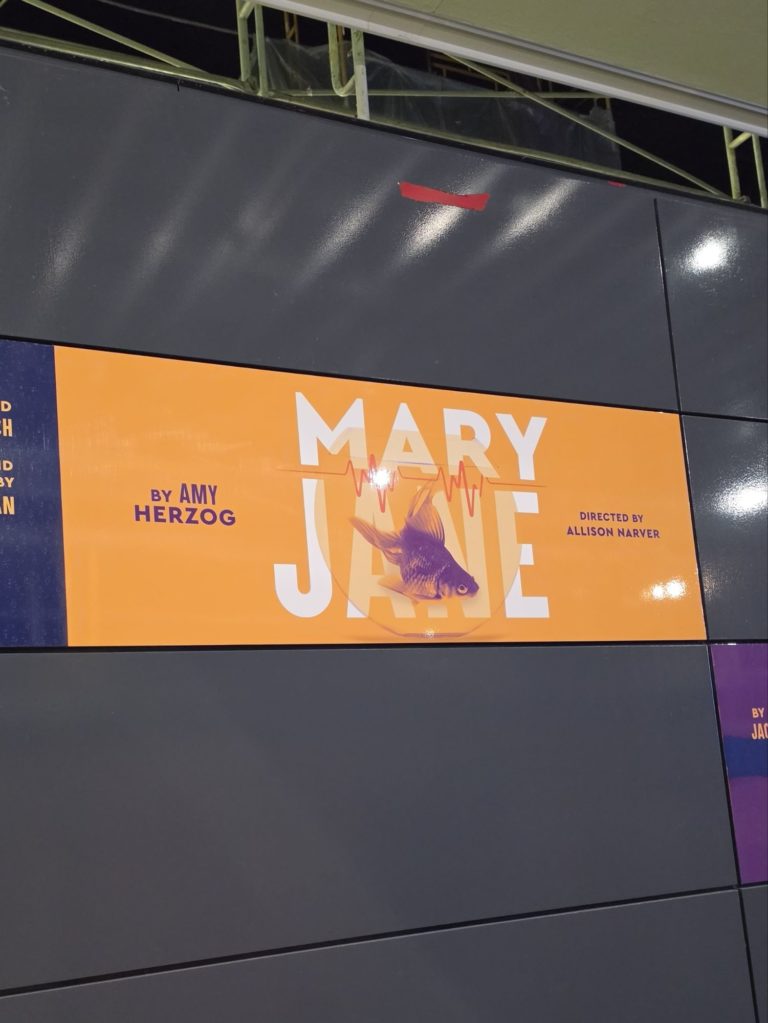
@showsiveseen Amy Herzog's "Mary Jane" at @Seattle Rep 🎭 starring Brenda Joyner in a quietly devastating #play about the invisible weight of long-term caregiving family members. A story of resilience and human connection for people dealt an impossible hand in life. Timely reminder that the USA desperately needs universal healthcare. Neat set by scenic designer Julia Hayes Welch that transitioned a dirty apartment to a sterile hospital waiting room. Closes 4/19/26. Review: showsiveseen.com/15125 Director: @Allison Narver Stage Mgr: Jeffrey K. Hanson #caretaker#theatre#showsiveseen♬ Red Room – Hiatus Kaiyote
Elevator Thoughts (aka Tweet): Amy Herzog’s Mary Jane at Seattle Rep 🎭 starring Brenda Joyner in a quietly devastating play about the invisible weight of long-term caregiving family members. A story of resilience and human connection for people dealt an impossible hand in life. Timely reminder that the USA desperately needs universal healthcare. Neat set design from Julia Hayes Welch that transitioned from a dirty apartment to a sterile hospital. Closes 4/19/26.
Recommendation: See it if you’re okay with plays that are kind of a downer.
Was This the First Time I Attended a Production of this Show? Yes
Would I See It Again 3 Years from Now? No, but it wasn’t bad.
Mainstream Appeal: Low to medium
If A Random Stranger Asked What Show They Should See This Weekend, Would I Mention This Production? Yes
My Synopsis (No Spoilers): Mary Jane follows a poor single mother navigating the relentless demands of caring for her child with cerebral palsy largely on her own.
Synopsis from the Licensor or Theatre Company: Mary Jane is a cheerful caregiver and unflagging advocate for her toddler, Alex, who lives with cerebral palsy and chronic illness—but the American healthcare system can wear anybody down, especially a single parent. While navigating her son’s health challenges, Mary Jane meets and builds community with women from all walks of life, experiencing joy and connection amidst the distress and heartbreak. Poignantly humorous and deeply cathartic, this semi-autobiographical drama by Tony-nominated playwright Amy Herzog is a love letter to caregivers and support systems of all kinds.
Type: Play
World Premiere: No
Several or Few Scenes: Few
Several or Few Settings/Locations: Two
Static (Stationary) or Dynamic Set: Mostly static except for a single moment when an apartment transformed into a hospital waiting room
Prior Exposure/Knowledge Required: None
Defined Plot/Storyline: It was more dialogue than action
Union Actor(s): 4
Total Actor(s): 5
Perceived Pace of the Show: Medium speed
Was there an intermission? No
Length (Including Any Intermission): 90 minutes
Other Rave(s)
Human Resilience: This was an eye-opening play that illuminated the quiet, unglamorous struggles of caregivers taking care of disabled family members. It can certainly also be extended to adult children caring for aging parents. What struck me most was Mary Jane’s (played by Brenda Joyner) extraordinary positivity in the face of genuinely shitty circumstances. She had a disabled child who could not communicate, a partner who left her because of the child, and financial precarity as a constant backdrop. Her responses to crisis were admirable, calm, and even slightly positive. It was the composed face of someone who learned that falling apart is a luxury she cannot afford. The play’s most wonderfully tense moment was a seizure scene that sent one character into a panic while Mary Jane held it together with a strong single mother front.
Human Connection: The theme of community and support was one of the play’s most affecting threads. It was a reminder that it really does “take a village” in this life. A particularly heartbreaking scene was when Mary Jane counseled a newly-initiated cerebral palsy mom (played by Andi Alhadeff). It laid bare the troubling fact that the knowledge caregivers need to survive is still passed informally person-to-person because the documentation and broader systems of support simply aren’t there. Sufferers must teach other sufferers to ensure survival.
Stage Mechanics: Lately, I’ve noticed Seattle Rep has developed a real flair for transformative sets that make a statement through their movement. In this show, scenic designer Julia Hayes Welch conceptualized a dingy New York City apartment that opened up mid-play into a sterile hospital waiting area. It reminded me of the rotating stage in Seattle Rep’s previous Mother Russia and Blues for an Alabama Sky. Or the police car and rising patio wall in Seattle Rep’s Laughs in Spanish. It’s becoming a signature of the Seattle Rep’s productions.
Other Musing(s) and Observation(s)
Dialogue Play: I’m typically not drawn to dialogue-heavy plays, but I didn’t even register that Mary Jane was one until after the show. This is an indicator that the absence of conventional action didn’t feel like a deficit in the script.
Title: “Mary Jane” was a slightly puzzling choice for a title and character name. The title primed me for a marijuana subplot (which is a reasonable assumption for a Seattle audience) that never materialized. Whether the title was meant to signal something more symbolic, I’m still not sure. It felt like an opportunity for a stronger signal.
HIPAA: The script implied that the home nurse (played by Shaunyce Omar) shared patient information with her niece. As a healthcare professional, I can’t help but wonder if HIPAA was followed!
Ending (Limited Spoilers): The ending was the play’s weirdest moment. It was abrupt, anticlimactic, and oddly fixated on a thread that had received little development earlier in the script. The fate of the son was never clearly resolved, and the final note left me searching for an ultimate message. Was it “there is beauty in pain?”
Theatre Company: Seattle Rep
Venue: Leo Kreielsheimer Theater at Seattle Rep
Venue Physical Address: 155 Mercer St, Seattle, WA 98109
Parking: There are paid lots and paid street parking. I usually park on Mercer to the West of 1st Ave. There’s usually also plentiful street parking around Safeway. If there’s an event in Seattle Center or Climate Pledge Arena, street parking is usually limited and much more expensive.
Like/Comment/Share my Social Media Posts About this Performance:
Photos: See production photos below by Sayed Alamy.
Cast and Production Team: See after photos below.
Brenda Joyner in MARY JANE (2026) at Seattle Rep. Lighting Design by Connie Yun. Photo by Sayed Alamy.Anteia Delaney, Brenda Joyner, and Shaunyce Omar in MARY JANE (2026) at Seattle Rep. Scenic Design by Julia Hayes Welch. Photo by Sayed Alamy.Brenda Joyner and Andi Alhadeff in MARY JANE (2026) at Seattle Rep. Photo by Sayed Alamy.Amy Thone and Brenda Joyner in MARY JANE (2026) at Seattle Rep. Scenic Design by Julia Hayes Welch. Photo by Sayed Alamy.Amy Thone and Brenda Joyner in MARY JANE (2026) at Seattle Rep. Photo by Sayed Alamy.Brenda Joyner and Anteia Delaney in MARY JANE (2026) at Seattle Rep. Costume Design by Heidi Zamora. Photo by Sayed Alamy.Brenda Joyner and Shaunyce Omar in MARY JANE (2026) at Seattle Rep. Photo by Sayed Alamy.
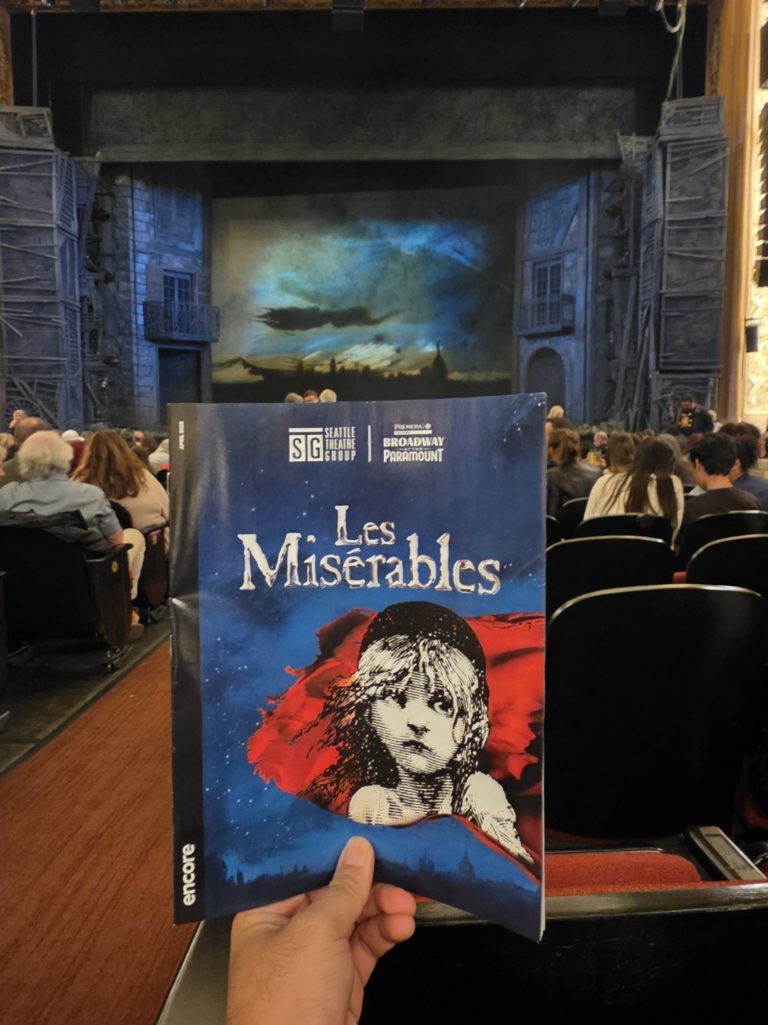
@showsiveseen "Les Misérables" #musical 🎭 national tour from Broadway Across America, Seattle Theatre Group, and Cameron Mackintosh. Starring @Nick Cartell. Golden voices. Glorious ensemble. Seamless scene transitions. Judicious use of projections & spotlights. Even the guy behind me was barely containing his excitement. "To love another person is to see the face of God!" Closes 4/19/26. Review: showsiveseen.com/15056 Resident Director: Kyle Timson Stage Mgr: Kenneth J Davis and Tara Tolar-Payne Music Director: Glenn Alexander II #LesMiserables#theatre#musicaltheatre#lesmis @lesmisofficial ♬ original sound – lesmisofficial
Elevator Thoughts (aka Tweet): Les Misérables 🎭 national tour from Broadway Across America, Seattle Theatre Group, and Cameron Mackintosh. Starring Nick Cartell. Golden voices. Glorious ensemble. Seamless scene transitions. Judicious use of projections & spotlights. Even the guy behind me was barely containing his excitement. “To love another person is to see the face of God!” Closes 4/19/26.
Recommendation: See it if you’re okay with visually dark musicals.
Was This the First Time I Attended a Production of this Show? No, this is probably the 5th time I’ve seen this musical. I last saw the national tour at The 5th Avenue Theatre.
Would I See It Again 3 Years from Now? Probably not … 5 times is enough for me.
Mainstream Appeal: Medium
If A Random Stranger Asked What Show They Should See This Weekend, Would I Mention This Production? Yes
My Synopsis (No Spoilers): Les Misérables follows Jean Valjean, a convict on the run whose only crime was stealing a loaf of bread to feed his starving family. Set against the turbulent backdrop of nineteenth-century France, the story weaves together the struggles of the “miserable” downtrodden working class with the idealism and tragedy of the June Rebellion of 1832.
Synopsis from the Licensor or Theatre Company: Still the world’s most popular musical. Cameron Mackintosh presents the acclaimed production of Alain Boublil and Claude-Michel Schönberg’s Tony Award®-winning musical phenomenon, LES MISÉRABLES. This brilliant staging has taken the world by storm and has been hailed as “LES MIS for the 21st Century” (Huffington Post), “a reborn dream of a production” (Daily Telegraph) and “one of the greatest musicals ever created” (Chicago Tribune). Set against the backdrop of 19th century France, LES MISÉRABLES tells an enthralling story of broken dreams and unrequited love, passion, sacrifice and redemption–a timeless testament to the survival of the human spirit. This epic and uplifting story has become one of the most celebrated musicals in theatrical history. The magnificent score of LES MISÉRABLES includes the songs “I Dreamed a Dream,” “On My Own,” “Bring Him Home,” “One Day More,” “Master of the House” and many more. Seen by over 130 million people worldwide in 53 countries and 22 languages, LES MISÉRABLES is undisputedly one of the world’s most popular musicals.”
Type: Musical
World Premiere: No
Several or Few Scenes: Several
Several or Few Settings/Locations: Several
Static (Stationary) or Dynamic Set: Dynamic
Prior Exposure/Knowledge Required: None, but you’ll probably appreciate this more if you read the book.
Defined Plot/Storyline: Yes
Live Band/Orchestra: Yes
Union Actor(s): All
Total Actor(s): Too many to count
Perceived Pace of the Show: Medium to fast speed
Was there an intermission? Yes
Length (Including Any Intermission): 2.75 hours
Other Rave(s)
Ensemble: The full ensemble numbers were consistently the show’s most thrilling moments. From the grim urgency of “Look Down” to the glorious “At the End of the Day,” Each full-cast sequence carried the sweeping weight you’d expect from an epic musical.
Magical Transitions: Scene transitions were seamless, never pulling focus from the real action. The blocking itself felt almost magical at times when actors materialized out of nowhere like when the wedding scene opened, or when characters eerily emerged from the sewer. Where many national tours lean too heavily on projections as a crutch, projection designer Finn Ross and 59 Productions created them with restraint and imagination. It was particularly clever when they zoomed the projection in and out to simulate movement through the sewer or village while actors marched in place creating a simple illusion that worked beautifully. The standout moment was during a fall into the water with an actor suspended mid-air against a crashing-wave projection backdrop.
Female Leads: Lindsay Heather Pearce brought radiant clarity to the iconic “I Dreamed a Dream.” Her voice was as golden as her signature locks. Jaedynn Latter matched her in pure emotional power with a stunning “On My Own,” building to a climactic moment that sent the audience wild. The only thing stopping her extended ovation was the cast and orchestra pressing forward into the next scene. The brief, sweet harmony shared by Fantine and Eponine near the show’s close felt like the perfect finishing touch. The electricity in the house was palpable throughout the show. And the man seated behind me was practically vibrating with restrained enthusiasm, clearly fighting every instinct to cheer at full voice out of respect for theatre etiquette.
Rant(s)
Ground Action: The production made frequent use of low, ground-level movement as actors crouched, crawled, or collapsed in anguish. At many venues, this would have been read as striking movement design. But, at the Paramount Theatre, it became a persistent frustration. All the seats in the Paramount Theatre are infamous for its shallow slope. Anyone seated in the orchestra level will spend much of the show staring at the backs of heads when so much action unfolds at the stage foot level.
Other Musing(s) and Observation(s)
The Look and Sound: This musical is notorious for its deliberately dark, austere aesthetic by Matt Kinley. While it’s not my taste, I can appreciate its intent. The gloom did create a practical frustration though. At stage distance, distinguishing actors’ faces is already a challenge, and the shadowy palette compounded this further.
Yet the darkness earned its merits. The lighting design by Paule Constable found real power against such a somber backdrop. For example, the single quiet shaft of light through the church window carried unexpected weight. Plus, the brightness of the wedding scene felt genuinely celebratory by contrast to the rest of the show. And the spotlights during the rebellion sequence were deployed with stark clinical precision as each beam isolated a fighter at the moment they were shot, so the audience felt every death individually.
Meanwhile, the audio was nothing short of spectacular. The voices, music, and sound design were an almost ironic counterpoint to the visual restraint. The audio was rich and expansive while the staging was dull and dreary. It was bold artistic tension.
Fire: Speaking of the rebel fight sequence, the production made the bold choice of using real gunpowder and open flame onstage. The acrid smell drifted through the audience to add a visceral and immersive edge to the chaos. I didn’t know whether to count it as plus for atmosphere or a negative for second-hand smoke health hazard!
Speed and Punctuality: This production was unusually preoccupied with a sense of punctuality that I’ve rarely encountered, including on Broadway. The show started just two minutes after the scheduled time, which is virtually unheard of these days. Most shows don’t get going until at least 5 minutes past. The consequence was real as a significant number of latecomers scrambled to find their seats. The resulting commotion of flashlights, glowing phone screens, and “excuse me” chatter was jarringly distracting during one of my favorite moments (“At the End of the Day” song).
The clock-watching didn’t stop there. Intermission ended with the same brisk efficiency, which again is unusual for any production, let alone on opening night. A few numbers like “A Little Fall of Rain” felt slightly rushed, as though the cast were racing the clock rather than letting the music breathe. Additionally, the production seemed almost allergic to extended ovations, cutting off the applause before the audience had a chance to fully express itself.
There’s something to be said for respecting people’s time, but a live theatrical experience has its own rhythm. Being too rigid or lax with the clock has its own costs. It’s a tight balancing act.
Child Actors: Cute children on-stage have always struck me as a crutch. It’s a cheap way to pander sympathy from the audience who mistakes sentimentality for genuine theatrical merit. Regardless of the child actor, year after year, the national tour always seems to introduce young Cosette with a cutesy baby voice that is as gratuitous as Gretl von Trapp from The Sound of Music film. I won’t be fooled!
Reader Comment from Social Media (4/11/26): “…I just want to say I was so hurt by your review. If you do not like shows that feature children, why bother reviewing them? Your comments were absolutely cruel and unnecessary. Next time remember these are real people you are speaking about and not just people you saw once on a stage. My daughter is amazing and incredibly talented. She’s brave enough to get up on a stage in front of thousands of people. She’s a rockstar and is going to do amazing things someday.”
My Response (4/11/26): “Thank you for the engagement. To answer your question, I continue reviewing productions that include children because my rants/raves on artistic merits extend well beyond any single character, as you can see from the rest of my review.
My comments on child actors were a critique at directors and creative teams who, production after production, present young Cosette as calculatedly adorable rather than as the traumatized abused child the character actually is. It’s a storytelling choice that I find dramatically dishonest, and it’s a rant I’d raise regardless of who was cast in the role. It was never a personal attack of your daughter.
That said, I do recognize [your daughter] is a real person, and I’d genuinely be curious to see her in a role that allows her to showcase her dramatic range where charm isn’t the point. That’s when a young actor’s real abilities tend to reveal themselves.
Performing on a national tour is a remarkable achievement and I applaud anybody brave enough to perform on-stage. But public performance at the national/global level naturally invites public critique. That’s true for every performer on that stage, child or adult. [Your daughter] is already doing amazing things today that most people couldn’t even dream of ever doing. I hope she continues performing, grows a thick skin, and one day lands a role that showcases the full range of her talent.”
A Puzzling Triumph: This musical remains an enigma to me. It’s baffling how a story steeped in misery has become one of the most enduring hits in theatre history. Audiences surely attend theatre to escape their troubles, not to have their troubles reflected back at them in song. Somehow it works with Les Misérables.
This production brought its own quirks to the table. The innkeeper’s wife was delivered with what can only be described as a faint American country twang. It was an unexpected curious choice, but not ruinous.
However, my longest-standing frustration still persists after at least five viewings – I still cannot understand the final choices made by both protagonist and antagonist. The reasons for their ultimate actions seemed inadequate for the gravity of their choices.
Theatre Company: National Tour from Broadway Across America and Seattle Theatre Group
Venue: Paramount Theatre
Venue Physical Address: 911 Pine St, Seattle, WA 98101
Price Range: $85.60 – 230
Ticket Affordability Options: Seattle Theatre Group might partner with an organization you’re affiliated with for discount tickets. For example, I believe UW employees/students are still eligible for an organization discount.
Seating: Assigned Seats
Parking: Paid street parking and paid garage parking. The best parking garage is under the convention center w/ the entrance on Pike around the Pike and Terry intersection. Last I checked, this is one of the cheapest, least busy, and closest garages. Alternatively, you can probably find street parking as you move closer to the West Precinct (810 Virginia St, Seattle, WA 98101). Do NOT park where the Paramount subscribers park. Last I checked, they usually park in the garage attached to the former Cheesecake Factory. It’ll take you at least 30 minutes to exit that garage after the show.
Like/Comment/Share my Social Media Posts About this Performance:
“One Day More” from LES MISERABLES (Christian Mark Gibbs as Enjolras). Photo: Matthew Murphy. “Bring Him Home” – Nick Cartell as Jean Valjean in LES MISERABLES. Photo: Matthew Murphy. “Stars” –Hayden Tee as Javert in LES MISERABLES. Photo: Matthew Murphy & Evan Zimmerman for MurphyMade“I Dreamed A Dream” – Lindsay Heather Pearce as Fantine in LES MISERABLES. Photo: Matthew Murphy. “Beggars at the Feast” from LES MISERABLES. Photo: Matthew Murphy. “The Barricade” – Christian Mark Gibbs as Enjolras and company in LES MISERABLES. Photo: Matthew Murphy.(From L) Alexa Lopez as Cosette, Jaedynn Latter as Éponine, Peter Neureuther as Marius and Nick Cartell as Jean Valjean in LES MISERABLES. Photo: Matthew Murphy.Credits from the printed ENCORE program.Credits from the printed ENCORE program.Credits from the printed ENCORE program.Credits from the printed ENCORE program.
@showsiveseen "The Notebook" #musical national tour at Paramount #Theatre from Broadway Across America and @Seattle Theatre Group. The chemistry between all three versions of the leads (teenage, adult, and elderly) felt like one continuous soul. #Alzheimer's theme was woven into the non-plot portions of the production. Appreciated the intentional inclusive casting. Didn't expect real water on-stage for the iconic rain kiss scene! Closes 3/8/26. Review: showsiveseen.com/14880 Music: @Ingrid Michaelson Book: Bekah Brunstetter Novel: @Nicholas Sparks Director: Michael Freif and Schele Williams Choreo: @Katie Spelman Music Supervision: Carmel Dean Music Director: Tina Faye Stage Mgr: Justin Myhre #TheNotebook#notebook @The Notebook Tour ♬ I Wanna Go Back – Joy Woods & Jordan Tyson
Elevator Thoughts (aka Tweet): The Notebook musical national tour at Paramount Theatre from Broadway Across America and Seattle Theatre Group. The chemistry between all three versions of the leads (teenage/adult/elderly) felt like one continuous soul. Alzheimer’s theme was woven into the non-plot portions of the production. Appreciated the intentional inclusive casting. Didn’t expect real water on-stage for the iconic rain kiss scene!
Recommendation: See it if you enjoy ballad musicals.
Was This the First Time I Attended a Production of this Show? Yes
Would I See It Again 3 Years from Now? No
Mainstream Appeal: Medium to low
If A Random Stranger Asked What Show They Should See This Weekend, Would I Mention This Production? Maybe
My Synopsis (No Spoilers):
Based on the beloved film and novel, this show portrays the timeless story of two young lovers separated by walls of class and parental expectation. Years later, they get one final chance at the life they were never supposed to have.
Synopsis from the Licensor or Theatre Company: Based on the best-selling novel that inspired the iconic film, The Notebook tells the story of Allie and Noah, both from different worlds, who share a lifetime of love despite the forces that threaten to pull them apart. “Full of butterfly-inducing highs and beautiful songs” (Entertainment Weekly), The Notebook is a deeply moving portrait of the enduring power of love. Chris Jones of The Chicago Tribune says The Notebook is “absolutely gorgeous, not to be missed,” and The New York Daily News calls it “a love story for the ages.” The Notebook is directed by Michael Greif and Schele Williams, and features music and lyrics by multi-platinum singer-songwriter Ingrid Michaelson, book by Bekah Brunstetter, and choreography by Katie Spelman
Type: Musical
World Premiere: No
Several or Few Scenes: Several
Several or Few Settings/Locations: Several
Static (Stationary) or Dynamic Set: Dynamic
Prior Exposure/Knowledge Required: You’ll likely appreciate this more if you read the book or saw the movie. Then again … you might spend the evening disappointed as you compare the musical to either.
Defined Plot/Storyline: Yes
Live Band/Orchestra: Yes
Union Actor(s): All
Total Actor(s): Too many to count
Perceived Pace of the Show: Medium Speed
Was there an intermission? Yes
Length (Including Any Intermission): 2.25 hours
Other Rave(s)
Iconic Moments: The night’s most striking moment was recreating the iconic rain pick-up kiss scene with real water falling onto a live stage, which is always an impressive and nerve-wracking feat. As a spectator, it’s hard not to wince for the microphones, costumes, wigs, and carefully applied makeup taking the brunt of it. However, Noah’s beloved “it wasn’t over… it still isn’t over” speech was curiously absent from the script. It would have been an easier addition to include this line the audience was almost certainly waiting for (I know I was).
Alzheimer’s Theme: Sharon Catherine Brown (as elderly Allie) meticulously portrayed a woman in the middle stages of Alzheimer’s Disease. Her performance was alive in the details, down to the restless hand-fidgeting that continued even when the spotlight moved elsewhere for extended period of time.
The production itself also seemed to internalize the disease as a structural principle. Rather than unfolding chronologically, the narrative drifted between distant teenager past, adult past, and elderly present in the fractured, non-linear way memory behaves in an Alzheimer’s patient. The audience were fellow travelers inside the disorientation of someone else’s slipping timeline. It was a bold choice that sometimes slightly tipped from an evocative trance of memories to confusion. The time jumps could also be jarring, none more so than an early leap of a full decade that bypassed much of the source material’s original story and the rich, delicious angst that made the film so affecting.
Race and Hair: Where Hollywood (including the original movie) typically defaults to white characters for this kind of love story, this production deliberately and refreshingly cast half the characters as Black mirroring the diversity of the black-ish TV show universe. There was disapproving interracial parents (a Black father, a white mother) to the central interracial couple and their biracial (grand)children. The production also quietly subverted convention by making the white male lead without means, while the biracial female lead carried both wealth and agency.
Equally striking was how the production used hair (designed by Mia Neal) as a visual language for identity. Young Allie proudly wore her natural hair freely and unabashedly trusted her true self. As an adult bending to the weight of expectation, she straightened her hair into conformity. Then in the iconic rain scene, she was soaked, raw, and finally honest about what she wanted as her hair loosened back into its natural curl.
Song Highlights: “I Wanna Go Back” was a standout number when teenager Allie (played by Chloe Cheers) and adult Allie (played by Alysha Deslorieux) with clear voices in sweet harmony gave life to lost elderly Allie’s longing for the past. The song’s most poignant line, “I didn’t know that the last time I’d leave the house was the last time I’d see my house,” was a gut-punch reminder that we rarely recognize life’s final moments as they happen. The other highlight was at the finale “Coda” where the full ensemble swelled in choir-like harmony. It was ethereal when the music stripped back to pure a cappella.
Rant(s)
One Dimension: The score was the production’s most glaring weakness. It was a parade of flowery legato ballads with little melodic distinction. Needless to say, I won’t be adding the soundtrack to my Broadway playlist! But beyond the forgettable songs, the deeper problem was an absence of contrast. If you’re going for one-dimensional, make that dimension razzle-dazzle instead of languid. Or at least add a lively song as a release valve to remind the audience that musicals can breathe. The show offered neither range nor electricity.
This flatness infected other layers of the production as well. The visual motif compounded the problem with an impressionistic, vaguely folk-inspired vibe drained of color except for a mournful monotone blue. The script leaned heavily on silence where momentum was needed. It’s toxic when a show’s score, visuals, and book all make the same mistake. The result was a tepid production.
Theatre Company: National Tour from Broadway Across America and Seattle Theatre Group
Venue: Paramount Theatre
Venue Physical Address: 911 Pine St, Seattle, WA 98101
Price Range: $55 – 192
Ticket Affordability Options: Seattle Theatre Group might partner with an organization you’re affiliated with for discount tickets. For example, I believe UW employees/students are still eligible for an organization discount.
Seating: Assigned Seats
Parking: Paid street parking and paid garage parking. The best parking garage is under the convention center w/ the entrance on Pike around the Pike and Terry intersection. Last I checked, this is one of the cheapest, least busy, and closest garages. Alternatively, you can probably find street parking as you move closer to the West Precinct (810 Virginia St, Seattle, WA 98101). Do NOT park where the Paramount subscribers park. Last I checked, they usually park in the garage attached to the former Cheesecake Factory. It’ll take you at least 30 minutes to exit that garage after the show.
Like/Comment/Share my Social Media Posts About this Performance:
Sharon Catherine Brown (Older Allie) and Beau Gravitte (Older Noah). Photo by Roger Mastroianni.Chloë Cheers (Younger Allie) and Kyle Mangold (Younger Noah). Photo by Roger Mastroianni.Alysha Deslorieux (Middle Allie) and Ken Wulf Clark (Middle Noah). Photo by Roger Mastroianni.The Notebook North American Tour Company. Photo by Roger Mastroianni.The Notebook North American Tour Company. Photo by Roger Mastroianni.Credits from printed ENCORE program.Credits from printed ENCORE program.Credits from printed ENCORE program.Credits from printed ENCORE program.
@showsiveseen Happy #openingNight in Everett (just closed in Issaquah) to @Village Theatre's production of Ken Ludwig's "Baskerville: A #SherlockHolmes Mystery" play. Richard Nguyen Sloniker and Avery Clark lead a sharp ensemble through a madcap British-style comedy #mystery, with strong doubling work from the full cast. Review: showsiveseen.com/14828 Photos: Rosemary Dai Ross Director: @adamimmerwahr5 Stage Mgr: Laurel Nichols #Sherlock#theatre♬ 5 Minutes – Don Diablo & Pink Sweat$
Elevator Thoughts (aka Tweet): Happy opening night in Everett (and closing in Issaquah) to Village Theatre’s production of Baskerville: A Sherlock Holmes Mystery. Richard Nguyen Sloniker and Avery Clark lead a sharp ensemble through a madcap British-style comedy mystery, with strong doubling work from the full cast.
Recommendation: See it if you enjoy British comedy or comedy mysteries.
Was This the First Time I Attended a Production of this Show? Yes
Would I See It Again 3 Years from Now? No
Mainstream Appeal: Medium
If A Random Stranger Asked What Show They Should See This Weekend, Would I Mention This Production? Yes
My Synopsis (No Spoilers): A comedic take on The Hound of the Baskervilles classic.
Synopsis from the Licensor or Theatre Company: Get your deerstalker cap on—the play’s afoot! From multi-award-winning playwright Ken Ludwig (Sherwood: The Adventures of Robin Hood) comes a fast-paced adventure about everyone’s favorite detective solving his most notorious case. The male heirs of the Baskerville line are being dispatched one by one. To find their killer, Sherlock Holmes and Dr. Watson must crack the mystery of “The Hound of the Baskervilles” before a family curse dooms its newest heir. Watch as our intrepid investigators try to escape a dizzying web of clues, silly accents, disguises and deceit as five actors deftly portray more than 40 characters. Does a wild hellhound prowl the moors of Devonshire? Can our heroes discover the truth in time? Join the fun and see how far from elementary the truth can be.
Type: Play
World Premiere: No
Several or Few Scenes: Several
Several or Few Settings/Locations: Several
Static (Stationary) or Dynamic Set: Mostly stationary with some dynamic elements
Prior Exposure/Knowledge Required: You should be familiar with The Hound of the Baskervilles classic. I was only vaguely familiar with the Wishbone version and was still a little lost.
Defined Plot/Storyline: Yes
Union Actor(s): 3
Total Actor(s): 5
Perceived Pace of the Show: Medium Speed
Was there an intermission? Yes
Length (Including Any Intermission): 2.25 hours
Other Rave(s)
Cast Doubling: The production inventively used cast doubling throughout the show with several moments where the device was openly acknowledged as a knowing wink to the audience that delighted in breaking the fourth wall. The standout moment was courtesy of Calder Jameson Schilling (or was it Mark Emerson?) where an old scullery maid revealed a male villain underneath, who then revealed yet the original another old scullery maid inside. It was a Russian nesting doll of disguise that was both absurd and technically impressive.
Costume Design: Much of the magic in this Russian nesting doll scene was also due to costume designer Pete Rush. Another particularly memorable costume moment was his decision to emblaze a Texan flag across the butt of proud Schilling’s long johns. It was a gag that was reminiscent of the patriotic American pilot in Operation Mincemeat.
Moments of Absurdity: The production showcased the cast’s commitment to physical storytelling and absurdity. A scene stood out for relying entirely on the actors’ bodies to depict treacherous wind without fans, but just remarkably convincing performance led by movement director Gabriel Corey. Equally enjoyable was the casual choreographed nonchalance with which props like umbrellas, hats, and newspapers were tossed between cast members or flung offstage in the wings, as though the chaos were perfectly ordinary. And then there was Schilling’s moustache piece, which staged a rebellion of its own. Whether a genuine costume malfunction or a plant so perfectly timed it only appeared accidental, the house was in an uproar. If it was unscripted, I hope they recreated the moment in subsequent performances.
Rant(s)
Script: For a lighthearted comedy, the production required too much brainpower from the audience with too many threads to follow. It started when the opening exposition overstayed its welcome. Ultimately, the script was not memorable. Though perhaps those who come already well-versed with the classic book will find more to love.
Other Musing(s) and Observation(s)
Village Theatre’s Artistic Direction: A pattern is emerging under Village Theatre’s Artistic Director Adam Immerwahr. It’s a gravitational pull toward Ken Ludwig adaptations (like Sherwood: The Adventures of Robin Hood) and genteel mystery fare that feels lifted straight from the Taproot Theatre playbook. That overlap is more than aesthetic as Taproot regulars Richard Nguyen Sloniker and Calder Jameson Shilling both appeared in Village’s recent Dial M for Murder as well as this production. Sloniker in particular has become the de facto Sherlock Holmes of Puget Sound, having reprised the role multiple times across the region.
Theatre Company: Village Theatre
Venue: Village Theatre
Venue Physical Address: 2710 Wetmore Ave, Everett, WA 98201 or 303 Front St N, Issaquah, WA 98027
Dates: 1/20/26 to 2/22/26 in Issaquah and 2/28/26 to 3/22/26 in Everett
Seating: Assigned Seats
Parking: There’s free street parking and some paid parking lots/garages. In Issaquah, I usually end up parking on Rainier Boulevard North. As a last resort, you can always find parking at the library but it’s a little far. Remember, there’s a bottom floor parking lot under the library’s main parking lot that mostly only locals know about.
Like/Comment/Share my Social Media Posts About this Performance:
Mark Emerson, Jonelle Jordan, Richard Nguyen Sloniker, and Avery Clark in Ken Ludwig’s Baskerville: A Sherlock Holmes Mystery at Village Theatre. Photo by Rosemary Dai Ross (2026).Avery Clark and Calder Jameson Shilling in Ken Ludwig’s Baskerville: A Sherlock Holmes Mystery at Village Theatre. Photo by Rosemary Dai Ross (2026).Avery Clark and Richard Nguyen Sloniker in Ken Ludwig’s Baskerville: A Sherlock Holmes Mystery at Village Theatre. Photo by Rosemary Dai Ross (2026).Jonelle Jordan and Mark Emerson in Ken Ludwig’s Baskerville: A Sherlock Holmes Mystery at Village Theatre. Photo by Rosemary Dai Ross (2026).Credits from the printed ENCORE program.Credits from the printed ENCORE program.Credits from the printed ENCORE program.